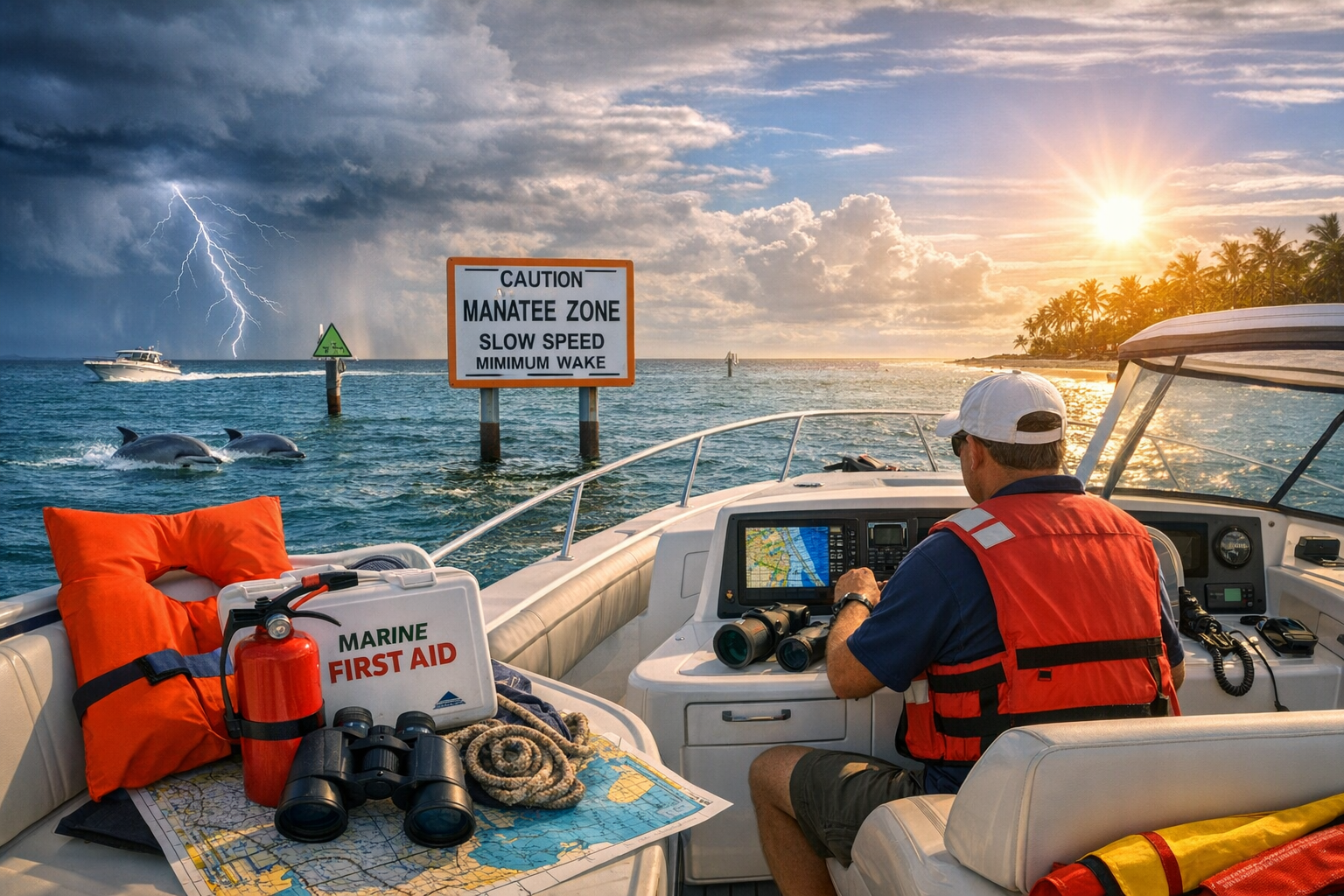
Florida boating in May marks the start of peak season—but from a marine surveyor’s perspective, it is also when preventable accidents, mechanical failures, and insurance claims begin to rise. Warmer weather, heavier boat traffic, and changing marine conditions require boaters to shift from casual cruising to deliberate preparation.
This guide provides marine surveyor–approved boating safety tips for May in Florida, helping you stay compliant, reduce risk, and enjoy the water with confidence.
Why May Is a High‑Risk Month for Florida Boaters
May sits at the crossroads between spring and summer. Weather becomes hotter and more humid, boating traffic increases statewide, and early tropical systems can appear before the official hurricane season begins June 1.
Marine surveyors consistently identify May as a month when:
- Deferred maintenance resurfaces
- Safety gear is outdated or non‑functional
- Weather awareness lapses lead to emergencies
Addressing these issues early can significantly reduce your exposure to risk.
Unpredictable Florida Weather in May
Florida’s May boating weather can change quickly. Calm mornings often give way to afternoon thunderstorms, which may include lightning, strong winds, heavy rain, and localized rough seas. These sudden shifts frequently contribute to groundings, collisions, and mechanical strain.
Surveyor Safety Tips
- Check the NOAA marine forecast before every trip
- Monitor weather via VHF while underway
- Plan routes with nearby protected waters
- Avoid long offshore runs late in the afternoon
Weather‑related incidents are among the most common causes of damage surveys this time of year.
May Is the Time to Prepare for Hurricane Season
Although hurricane season begins in June, marine surveyors consider May the final preparation window. Marinas, yards, and repair facilities become overwhelmed quickly once storms are forecasted.
Pre‑Season Vessel Checks
- Inspect dock lines, chafe gear, and cleats
- Test bilge pumps and float switches
- Load‑test batteries and charging systems
- Review insurance coverage and storm plans
Survey reports frequently show storm damage that could have been prevented with simple maintenance completed in May.
Boating Safety Equipment Checklist for Florida Waters
Florida law requires boats to carry and maintain U.S. Coast Guard‑approved safety equipment. Early‑season insurance and compliance surveys often uncover deficiencies before any incident occurs.
Inspect Before You Depart
- Life jackets for every passenger (proper size and accessible)
- Fully charged, unexpired fire extinguishers
- Navigation lights, horn, or whistle
- Engine cutoff switch (if applicable)
- Current registration and operator credentials
Even under Florida’s updated enforcement rules, safety compliance remains critical for liability and insurance coverage.
Heat, Sun, and Operator Fatigue
Florida heat arrives early, and extended exposure during May boating trips can impact judgment and reaction time. Marine surveyors frequently note fatigue and dehydration as secondary causes in accident investigations.
Reduce Heat‑Related Risk
- Carry more water than expected
- Use UV‑protective clothing and polarized sunglasses
- Take rest breaks during long runs
- Monitor engine cooling systems closely
Heat stress affects both people and equipment.
Increased Boating Traffic in May
Tourism, seasonal residents, and local boaters all converge in May, making Florida waterways significantly more crowded. Damage surveys consistently point to congestion as a major contributing factor in collisions.
Defensive Boating Practices
- Maintain a constant lookout
- Respect no‑wake and slow‑speed zones
- Communicate clearly near ramps, channels, and inlets
- Operate at safe speeds in congested areas
Many incidents reviewed by surveyors are preventable with patience and awareness.
Wildlife Awareness Is Mandatory in Florida
Manatees, dolphins, and other protected species are more active as water temperatures rise. Striking marine wildlife can cause severe vessel damage and significant legal consequences.
Surveyor Recommendations
- Strictly obey posted manatee zones
- Reduce speed in shallow or murky waters
- Watch for dive flags, crab traps, and floating debris
- Avoid seagrass beds that conceal underwater hazards
Environmental awareness protects your boat and Florida’s waterways.
Understanding Florida Boating Laws in 2026
Recent Florida boating law updates affect how inspections are conducted, but they do not remove safety or education requirements. Marine surveyors emphasize compliance regardless of enforcement changes, as insurers still expect full adherence to regulations.
Staying compliant protects you legally, financially, and operationally.
Marine Surveyor’s Final Recommendation
From a marine surveyor’s perspective, May is the most important month for setting up a safe boating season in Florida. Boats that enter summer properly maintained and equipped are far less likely to experience breakdowns, accidents, or claim‑triggering events later in the year.
Preparation now means:
- Safer operation
- Lower liability risk
- Fewer surprises
- More enjoyable time on the water